 English
 العربية


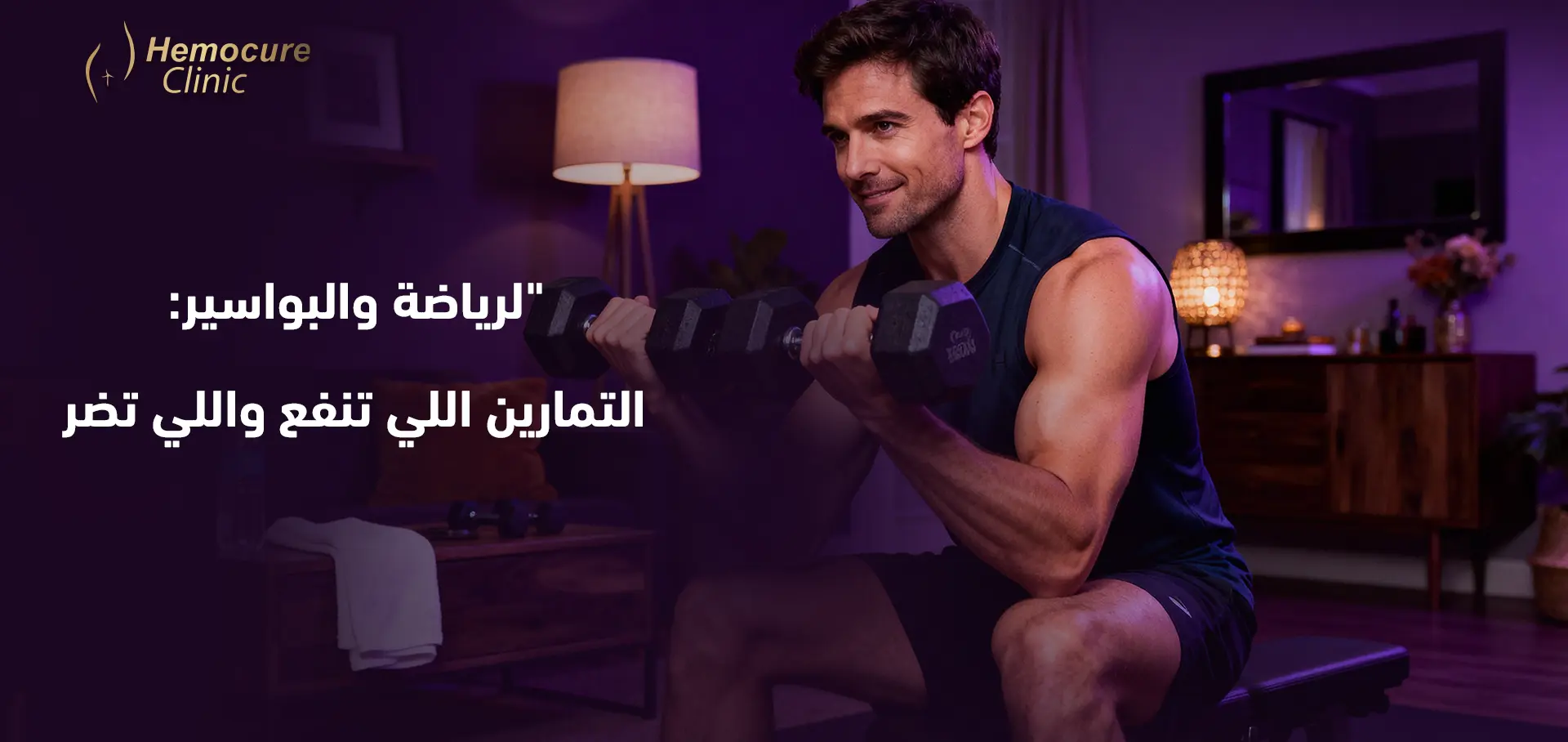
Hemorrhoids are common among athletes and young adults. While most people link them to constipation or straining, exercise itself can be a "double-edged sword"—it can either help improve the condition or significantly worsen it, depending on the type of activity.
In this guide from Hemocure, we outline the beneficial exercises that support your recovery and the dangerous ones you should avoid to maintain your health.
How Does Exercise Affect Hemorrhoids?
Physical activity affects the pelvic area in three main ways:
-
Bowel Motility: Aerobic exercises stimulate the colon and reduce constipation, the primary cause of hemorrhoids.
-
Blood Circulation: Certain sports improve blood flow in the pelvis, while others cause venous congestion.
-
Intra-abdominal Pressure: Exercises that require holding one's breath or pushing downward increase internal pressure, leading to hemorrhoid swelling.
Beneficial Exercises (What Helps?)
-
Walking (The Best Friend): It is the "king of safe exercises"; it improves circulation and stimulates the gut without putting pressure on the anal area.
-
Swimming: An ideal workout because water supports the body's weight, completely removing pressure from the pelvic floor and reducing swelling and friction.
-
Yoga and Flexibility: Yoga poses (like Child’s Pose or Legs Up the Wall) help reduce pelvic muscle tension and facilitate the passage of gas and bowel movements.
Dangerous Exercises (What to Avoid?)
-
Weightlifting: The most dangerous exercise for a hemorrhoid patient, especially Squats and Deadlifts. These cause intense straining that pressures rectal veins, which can lead to bleeding or sudden prolapse.
-
Long-Distance Cycling: Sitting on a hard bicycle seat causes direct pressure and constant friction on the hemorrhoidal area, increasing inflammation and swelling.
-
Intense Abdominal Exercises (Crunches & Sit-ups): These rely on pushing downward and raising intra-abdominal pressure, which irritates internal hemorrhoids.
Should You Quit the "Gym" Entirely?
No, but you must follow Safe Gym Rules:
-
Use lighter weights with higher repetitions instead of heavy loads.
-
Do not hold your breath: Breathe regularly while lifting to avoid abdominal pressure.
-
Focus on upper body exercises (arms, chest, back) while standing or lying down, and avoid seated positions that apply pressure.
When to Stop Exercising and See a Specialist?
Stop immediately and visit Hemocure if you experience:
-
Bright red bleeding during or after a workout.
-
A sudden, hard, and painful lump (thrombosed hemorrhoid).
-
Severe pain that prevents you from sitting or walking normally.
Why Choose Hemocure?
Exercise may alleviate symptoms, but it won't cure advanced hemorrhoids (Grade 3 & 4) or chronic fissures. At Hemocure, we use the latest global laser technology (Leonardo 1940nm) to treat hemorrhoids in minutes:
-
No surgery or tissue cutting.
-
Negligible pain.
-
Rapid Recovery: You can return to light sports (like walking) within just a few days.
📞 For inquiries and bookings at Hemocure Centers: 15251
Summary
Exercise is essential for a healthy lifestyle, but "moderation" is key. Walking and swimming support your healing, while heavy lifting might set you back. If hemorrhoids are stopping you from enjoying your favorite sport, laser treatment is the radical and final solution.
Add New Comment